Cut
Bald / clean-shaven head
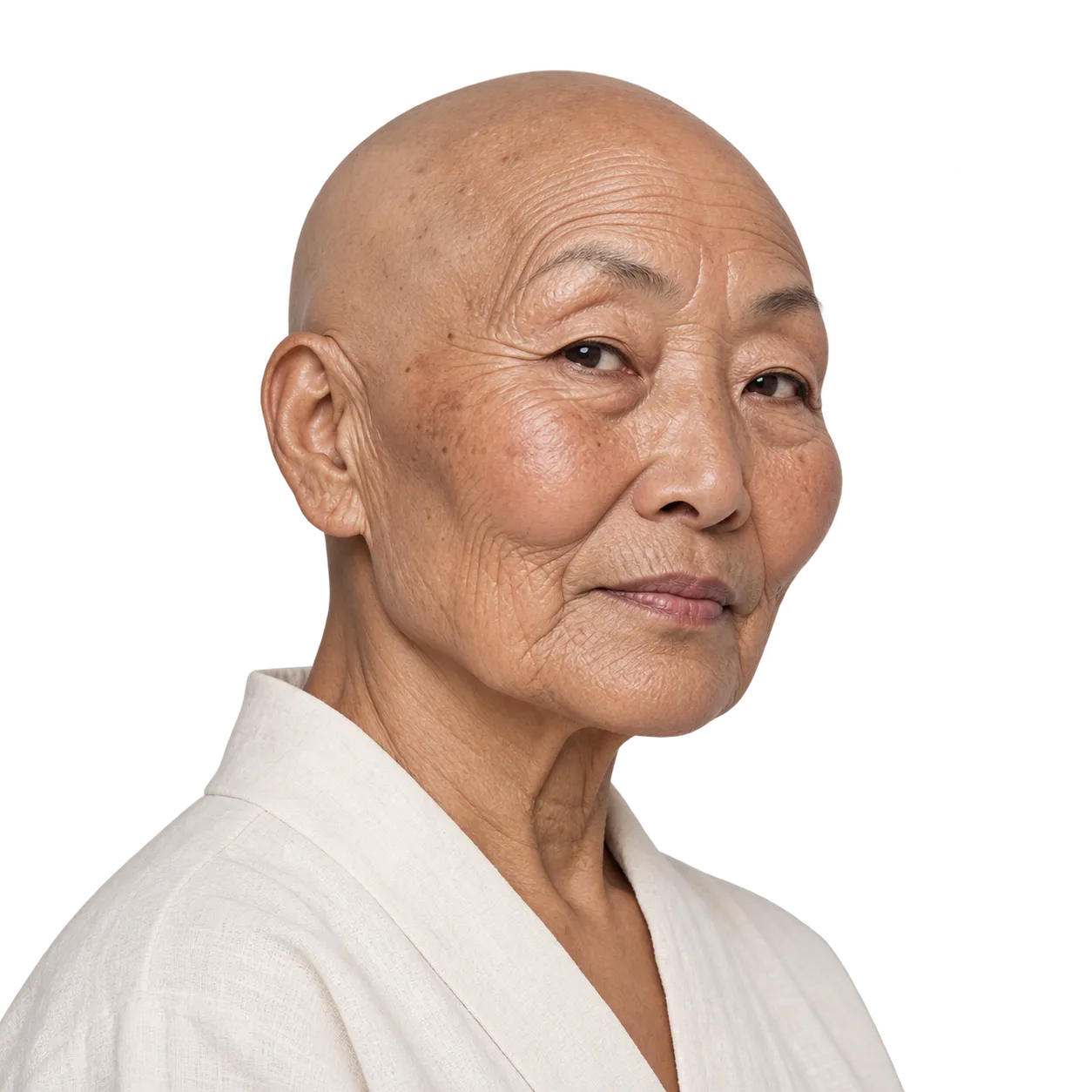
A clean-shaven head removes visible scalp hair rather than shaping the remaining hair into a particular length or texture.
Because shaving cuts hair at the skin surface rather than changing the follicle, the clean bald finish is temporary and visible regrowth can appear quickly.
The look is independent of natural curl pattern, density and hair color once the hair has been shaved sufficiently close.
This entry describes an intentionally shaved hairstyle. Naturally occurring baldness or medically caused hair loss may produce a visually similar scalp but is not itself a haircut.
Style notes
- Hair Type Compatibility
- 1A1B1C2A2B2C3A3B3C4A4B4C
Estimates describe how closely defining features can be achieved with ordinary cutting and styling while preserving the natural curl pattern, assuming sufficient length. They are not personal suitability scores, promises, or eligibility guidance. Each segment is labeled for screen readers with its subtype and resolved score.
Examples
More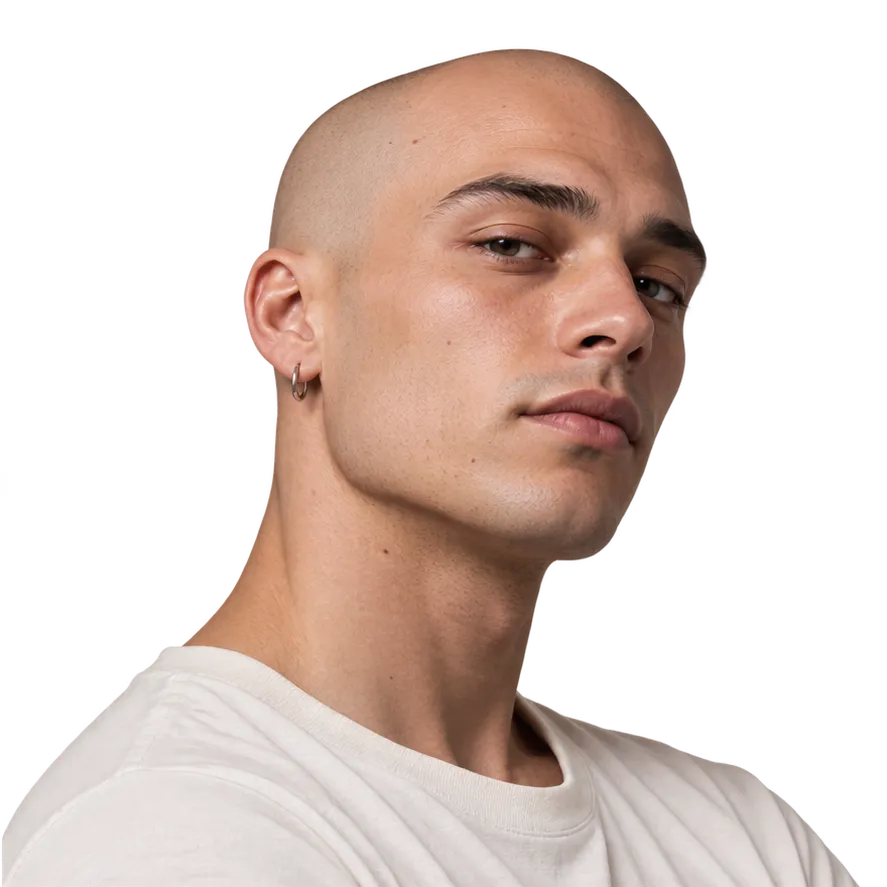
Variations
Choose the details
Close electric shave
Uses an electric shaver to leave an almost hairless appearance while potentially retaining a faint trace of extremely short stubble.
Razor-smooth shave
Removes hair extremely close to the skin for the least visible stubble and smoothest scalp appearance.
The main choices are how close the scalp should be shaved, how often the look will be maintained, and how sensitive the scalp is to repeated shaving.
- Do you want a razor-smooth scalp or is extremely short electric-shaver stubble acceptable?
- How frequently are you prepared to shave to keep visible regrowth minimal?
- Does your scalp tend to develop razor irritation, bumps or ingrown hairs?
- Are there scars, moles, bumps or other areas the barber should work around carefully?
- Do you also want the sideburn and neckline areas removed completely so the scalp transitions cleanly into the face and neck?
“I want my head completely clean-shaven with no visible hair left on the scalp. Keep the finish even from the forehead through the crown and nape, and use a method that gives me the closest comfortable shave without irritating my skin.”
What changes the result
Bring these variables
- The clean-shaven result is temporary because shaving removes hair at the skin surface rather than preventing future growth.
- Visible stubble may return quickly, so maintaining a consistently smooth appearance can require frequent shaving.
- Repeated shaving can cause cuts, razor burn, irritation or ingrown hairs, particularly when shaving too closely or against the direction of growth.
- A completely exposed scalp receives more direct ultraviolet exposure than a scalp covered by hair, so sun protection becomes more important.
- Scalp shape, scars, pigmentation, moles and other skin features become considerably more visible once the hair is removed.
- Natural hair type does not meaningfully constrain the finished appearance because the defining style removes the visible hair itself.
Related Hairstyles
More
Sources reviewed
Hair loss types: Alopecia areata self-care · American Academy of Dermatology · reviewed
Hair removal: How to shave · American Academy of Dermatology · reviewed
6 ways to remove unwanted hair · American Academy of Dermatology · reviewed