Cut
Thin mohawk
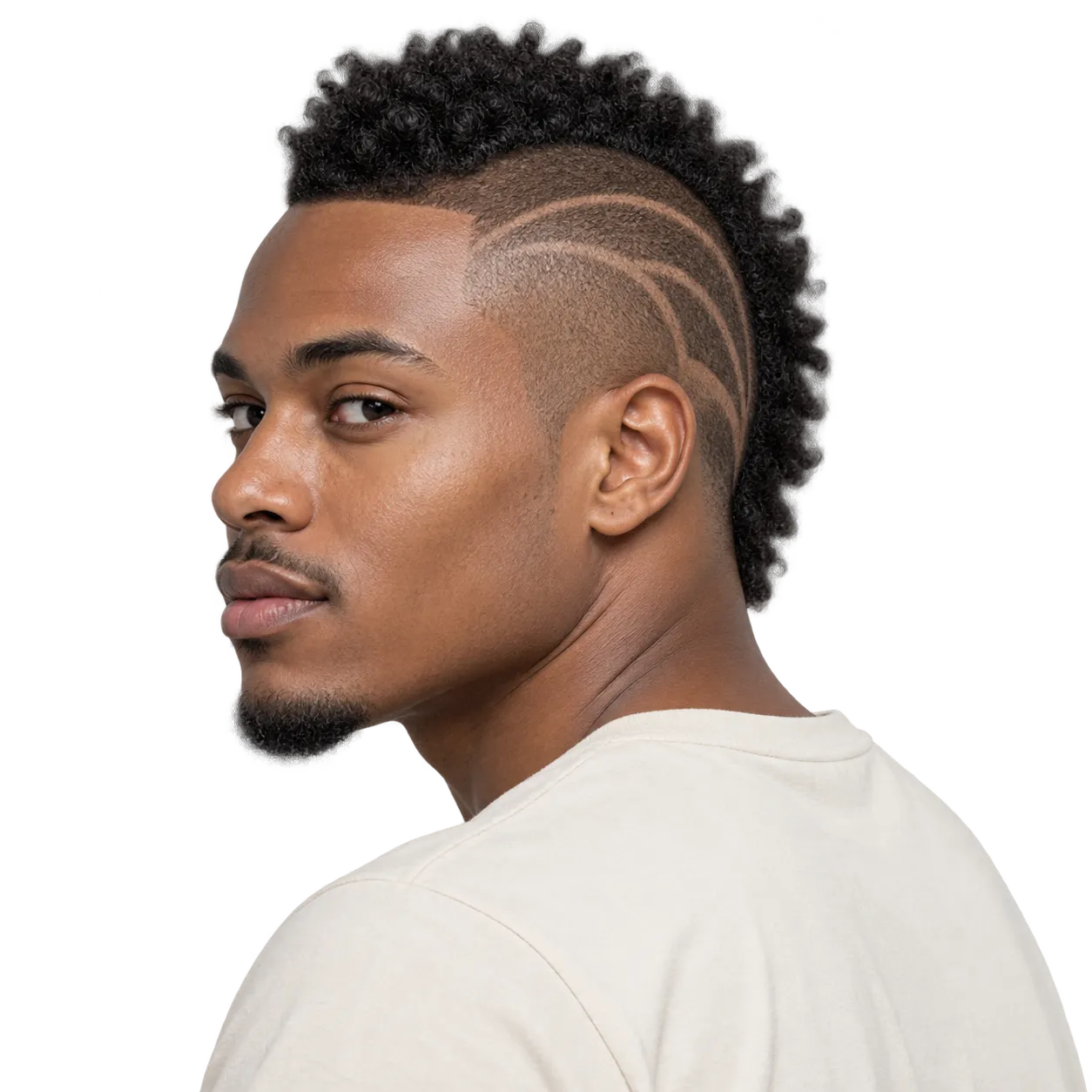
A thin mohawk reduces the mohawk idea to a deliberately narrow center strip. The sides can be skin-close or shadowed, while the strip stays short and upright or grows into a sharper crest.
Dark and blond versions can read very differently: contrast, color, and texture change how wide and tall the strip appears. Treat them as variations of one cut, not separate guides.

Reference gallery
Different ways it can read

Variations
Choose the details
Dark natural finish
Keeps the center strip in a deep natural tone for strong silhouette contrast.
Blond contrast
Uses a lightened center strip to make the crest read brighter and more graphic.
Low narrow crest
Keeps the center close and restrained for easier everyday maintenance.
Specify the strip width, side finish, color plan, and desired height before discussing styling product.
- How narrow should the center strip be at the hairline, crown, and nape?
- Should the sides be skin-close, shadowed, or softly tapered?
- Is the center staying dark, or is a blond/lightened contrast part of the brief?
- Should the strip stand upright, sweep back, or stay low and textured?
“Please leave a narrow center strip, close-shave the sides without taking the skin too high, and keep the top low enough to wear with a light matte product.”
What changes the result
Bring these variables
- Lightened hair needs a separate color and condition conversation; the cut alone does not determine its final tone.
- A narrow strip exposes growth direction and cowlicks, so a side and rear reference matters as much as the front.
- The contrast between center and sides is strongest immediately after the cut and softens as the sides grow.
Pattern guidance
Explore by hair type
A narrow strip can fall without product on straight hair; confirm the desired direction and the shortest comfortable side finish.
Wave can make a thin strip look fuller or less even; use a side reference to agree on the intended silhouette.
Curl changes apparent strip width and height; discuss whether the crest should stay compact or be left longer for lift.
Coily texture can keep a narrow crest visibly upright; plan around shrinkage, density, and the contrast created by close sides.
Related guides

Dated person records
These links show a documented appearance where this style was observed. They are visual records, not universal definitions.
Sources reviewed
Mario Balotelli’s hair: an obituary 2008–2015 · The Guardian · reviewed 2026-09-22
Mario Balotelli: Blond bombshell · Manchester City · reviewed 2026-09-22