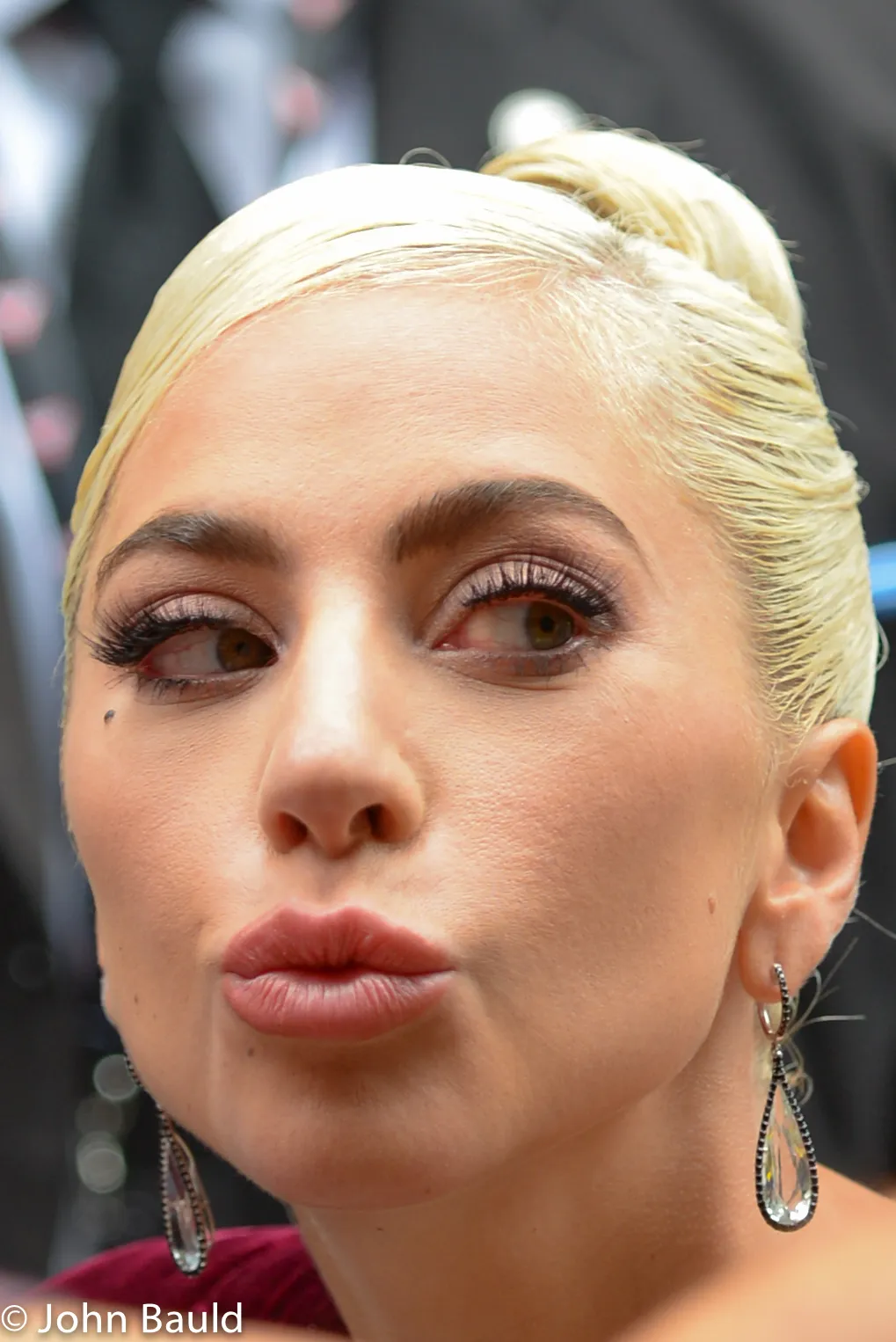
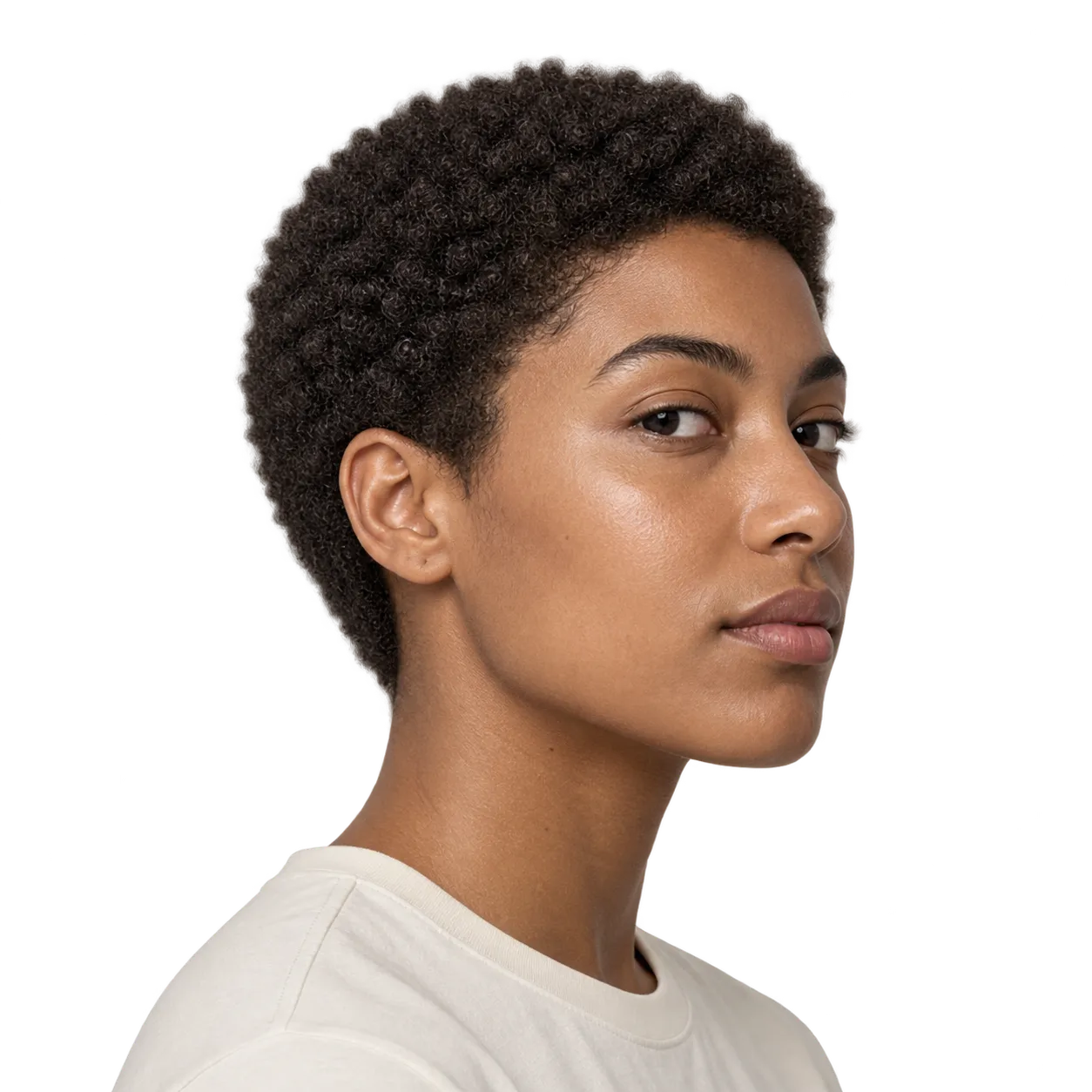
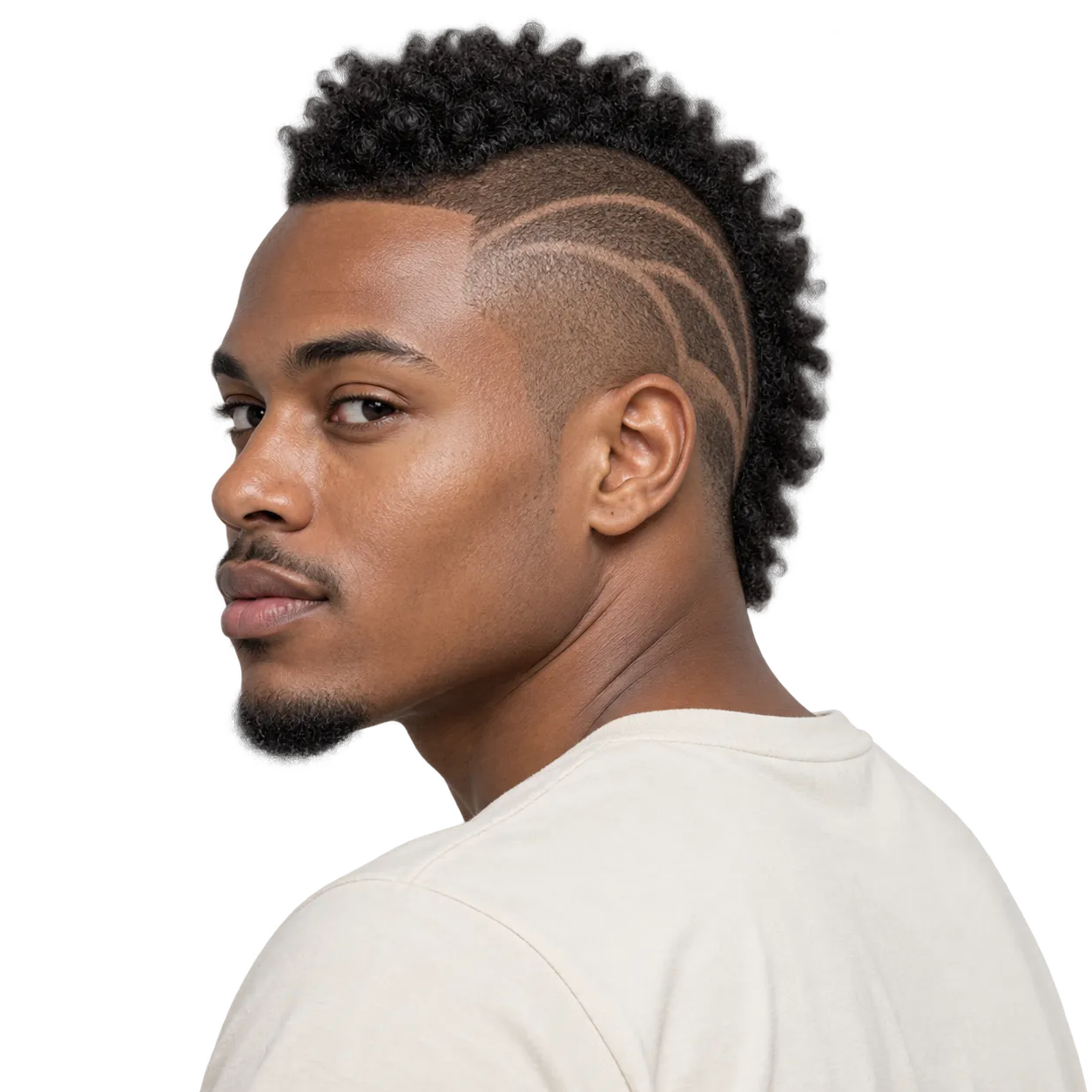
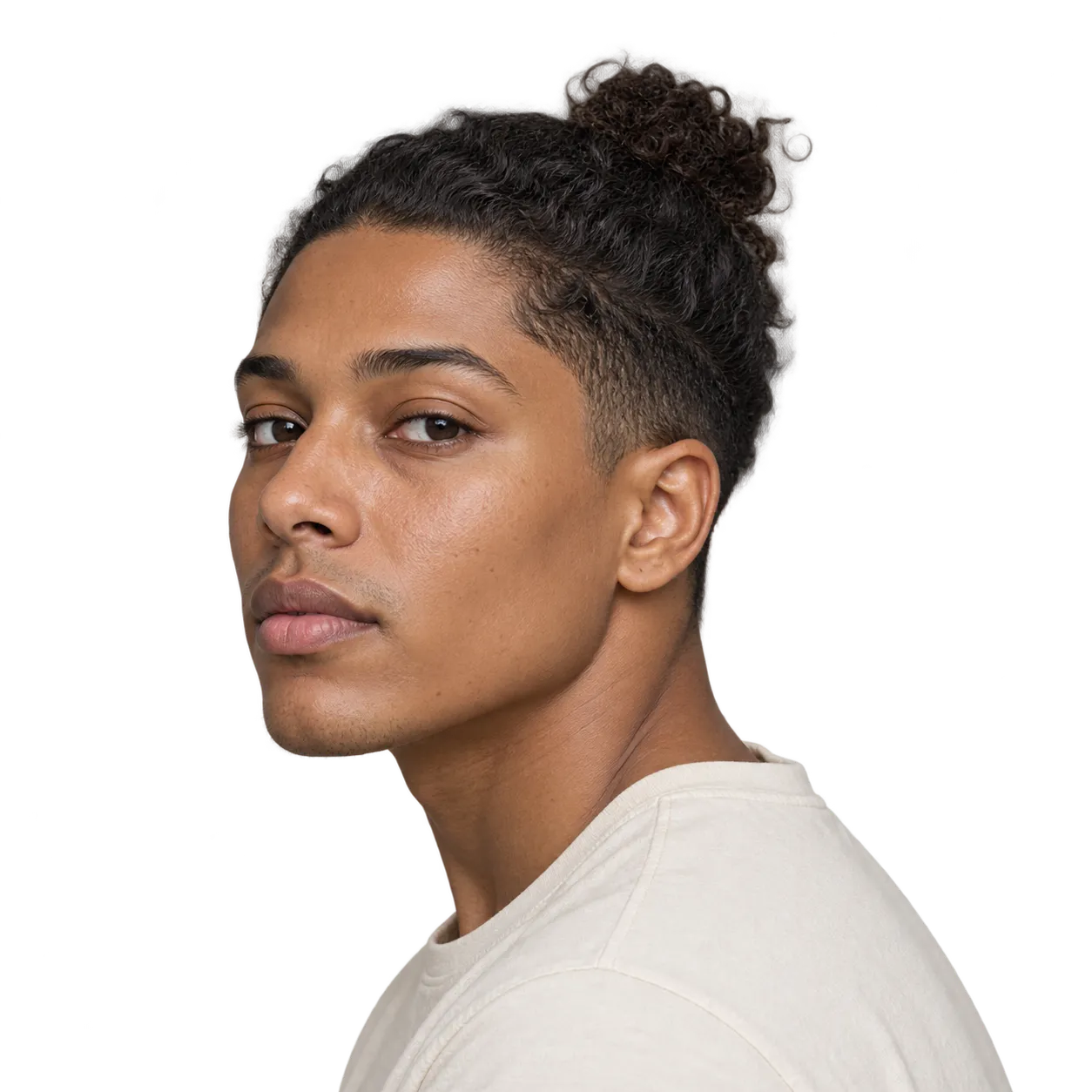
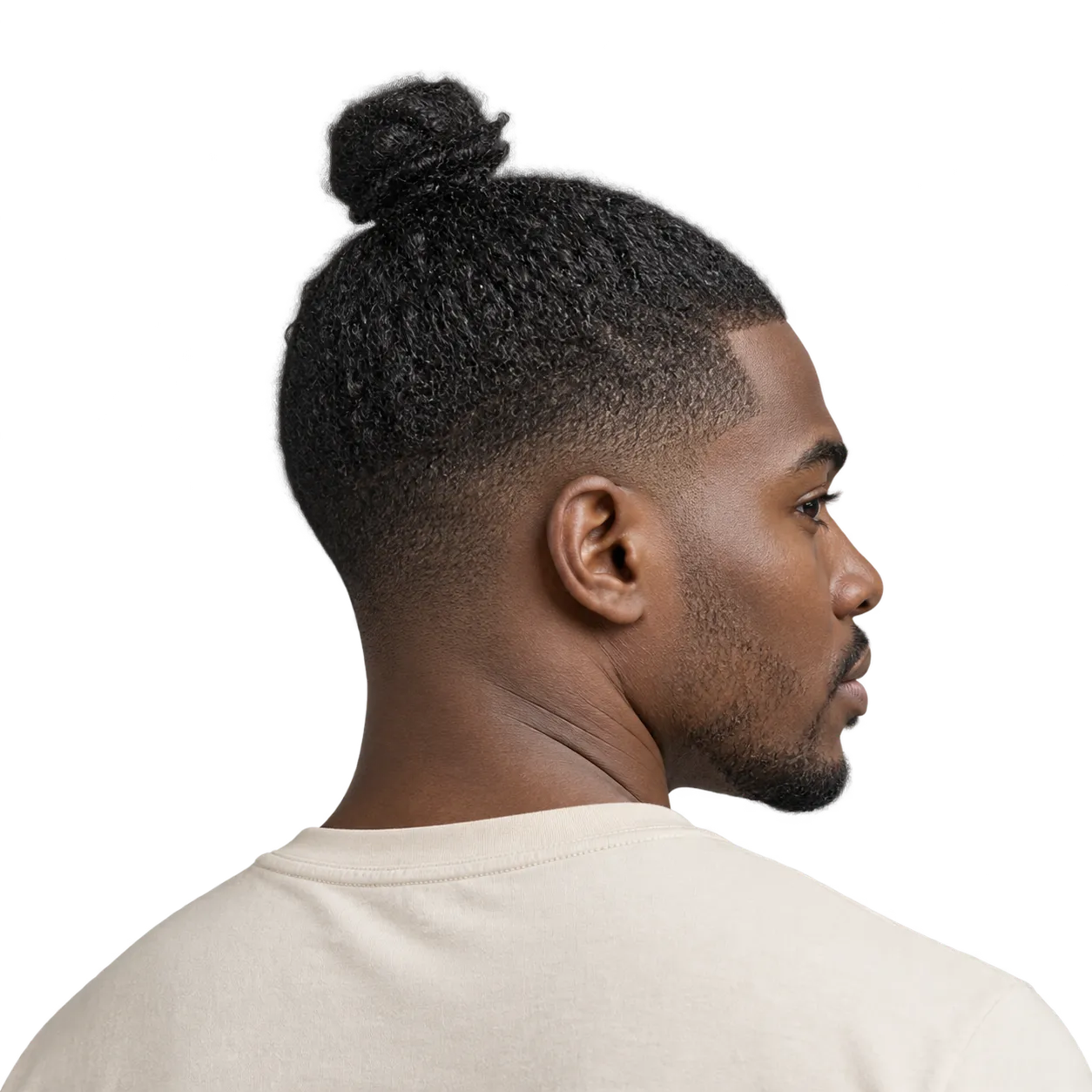
A top knot gathers enough length at or near the crown to form a compact tied shape. The surrounding hair may remain longer or be tapered, making the perimeter part of the overall silhouette.
This is a styling arrangement as much as a cut: section placement, tie tension, and the amount of loose texture left around the knot change its character.
Estimates describe how closely defining features can be achieved with ordinary cutting and styling while preserving the natural curl pattern, assuming sufficient length. They are not personal suitability scores, promises, or eligibility guidance. Each segment is labeled for screen readers with its subtype and resolved score.
Allows curl and coil to remain visible through the gathered shape and loose ends.
Loose gather
Keeps the knot relaxed with less tension and more visible texture around the tie.
Tapered perimeter
Pairs the gathered crown with close, gradually shorter sides and nape.
Confirm the minimum length, tie position, perimeter finish, and comfortable tension before committing to the arrangement.
•Where should the knot sit: crown, high top, or farther back?
•Should the sides and nape stay long, taper, or be cut close?
•How much curl, coil, or loose texture should remain visible around the tie?
•What level of tension is comfortable, and how often will the style be worn?
“I want a small top knot at the crown with a low taper around the sides and nape. Keep the tie comfortable and leave the natural texture visible through the knot.”
What changes the result
Bring these variables
A knot needs enough length to gather securely; a stylist can test the placement before cutting the perimeter.
Tension matters. Styles that hurt, sting, or pull should be loosened and reassessed.
Curl and coil shrinkage change the apparent knot size and required length; plan with the hair in its usual worn state.
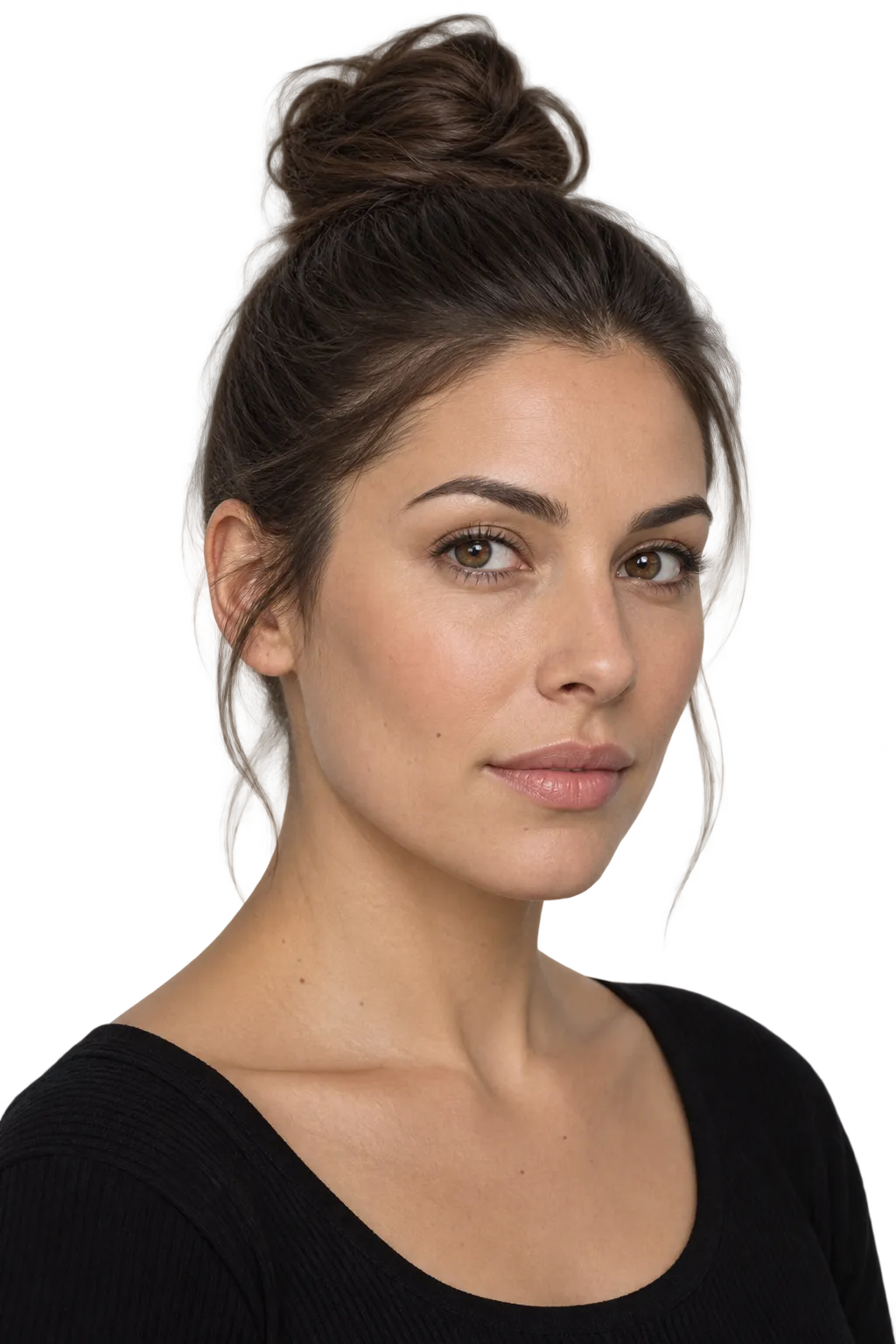
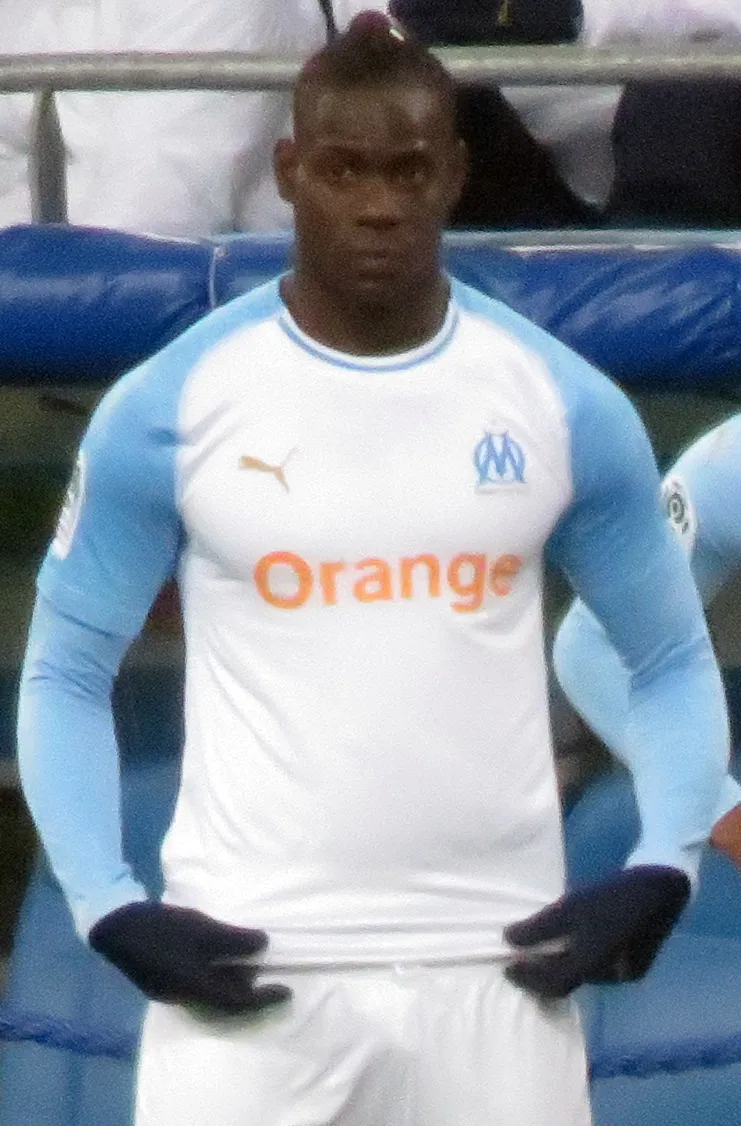 Bigmatbasket · CC BY-SA 4.0 · Source · cropped · Mario Balotelli OM (cropped)