Cut
Wolf cut
The wolf cut combines the abundant layering and movement of a shag with some of the front-to-back length contrast associated with a mullet.
There is no single fixed wolf-cut geometry. Softer versions blend the layers heavily, while more extreme versions use stronger disconnection between the crown, sides and retained back length.
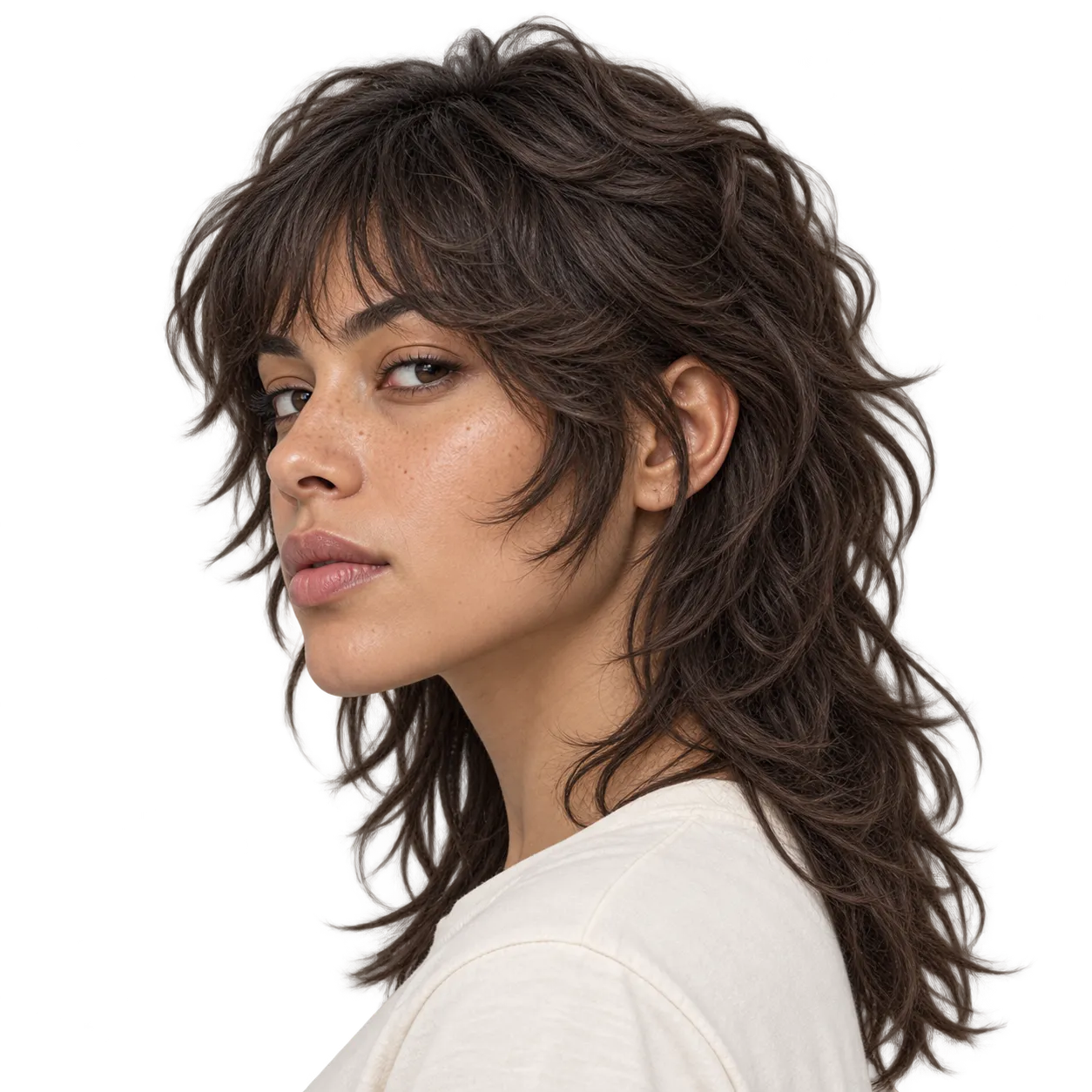
Reference gallery
Different ways it can read
Variations
Choose the details
Medium wolf cut
A shoulder-area version with visible crown layering, face framing and longer layers through the back.
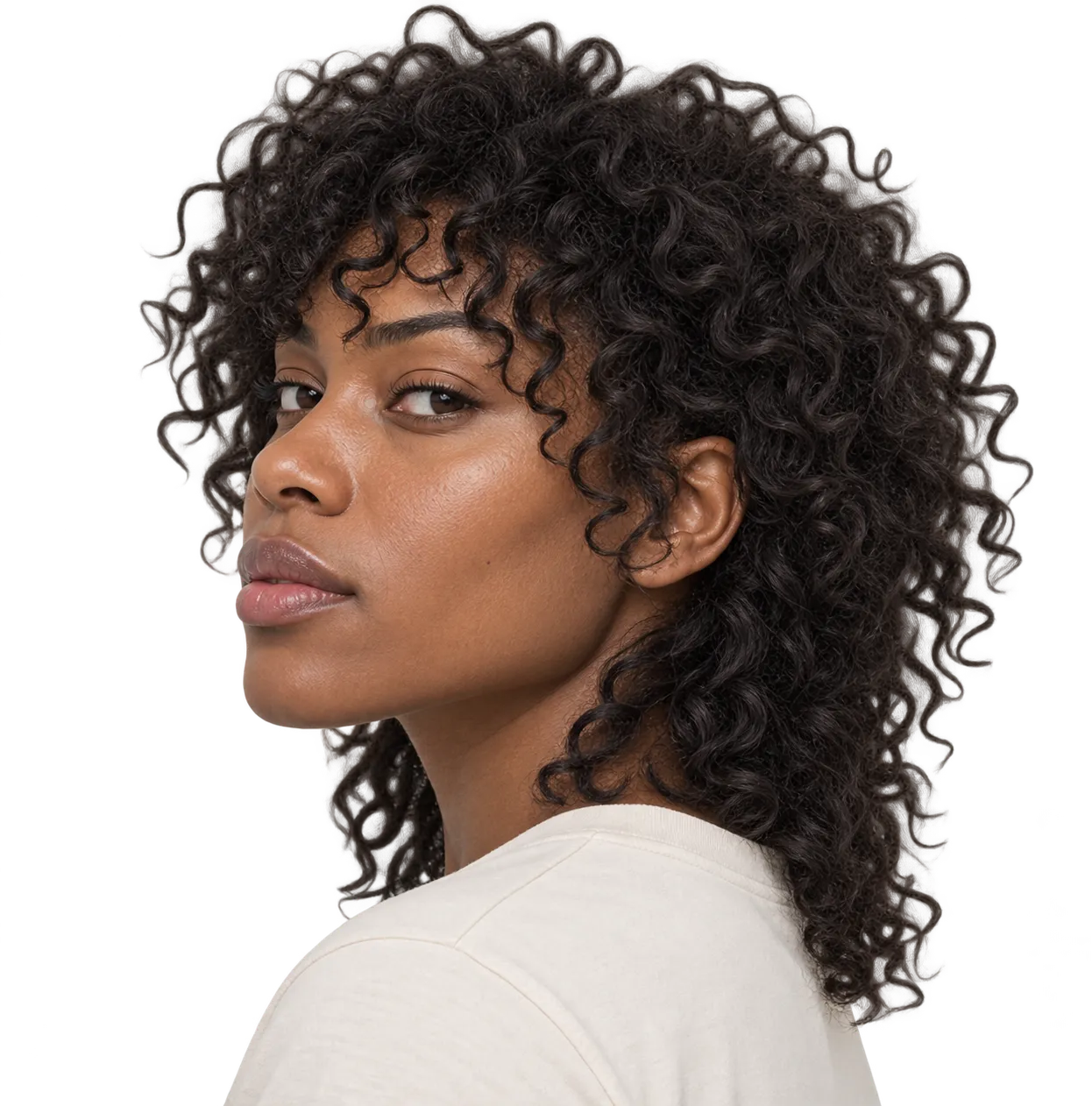
Curly wolf cut
Uses layered natural curls to create crown volume and a broader, more irregular outer silhouette.
Soft wolf cut
A more blended interpretation that sits closer to a shag, with less dramatic separation between short and long layers.
The key consultation choice is how strongly the cut should lean toward shag versus mullet.
- How much length should remain at the back?
- How short should the crown layers become?
- Should the layers blend softly or look deliberately disconnected?
- Do you want a fringe or face-framing pieces?
- Will the hair normally be worn in its natural texture or styled differently?
“I’d like a medium wolf cut with lots of crown volume and face-framing layers, but keep the transition into the longer back fairly soft rather than giving me a strong mullet.”
What changes the result
Bring these variables
- The name covers a broad family of cuts, so reference images are especially important.
- Heavy layering removes weight and can expose differences in density more strongly than a one-length cut.
- Straight hair may need styling to emphasize the texture and separation that occur naturally in wavy or curly hair.
- Curly and coily hair can shrink substantially, so the intended dry silhouette and layer placement should be assessed in the natural state.
Pattern guidance
Explore by hair type
Straight hair makes the individual layer lengths very legible, but may need styling or natural density to produce the characteristic volume and separation.
Natural wave readily emphasizes the cut's layered movement and irregular silhouette.
Curl creates substantial crown volume and makes layer placement especially important; dry-state shrinkage should be considered.
Coily hair can produce a much denser, more sculptural interpretation; the stylist should design the dry silhouette rather than reproduce straight-hair layer lengths literally.
Sources reviewed
The Wolf Cut Won't Ever Go Out of Style · Allure · reviewed 2026-09-22
What You Need To Know About The Wolf Cut Hair Trend · Hair.com by L'Oréal · reviewed 2026-09-22