Styling technique
Two-strand twists
Two-strand twists are a way of arranging hair, not a claim about the wearer’s natural pattern. The look can be individual and free-hanging, worked along the scalp as a flat twist, or adapted with extensions. Part size, direction, length, and the desired amount of stretch change the result.
A two-strand twist is not the same service as a flat twist, a braid, or starting and maintaining locs. Each changes the way sections are divided and secured, so name the arrangement you want rather than relying on a broad “twists” label.
Rope twist is a shop-dependent phrase. Some practitioners use it for a tighter two-strand effect or for twisting each section before wrapping the pair. Show a reference and ask the stylist to explain the technique, parting, extension plan, and whether the style is intended to be temporary.
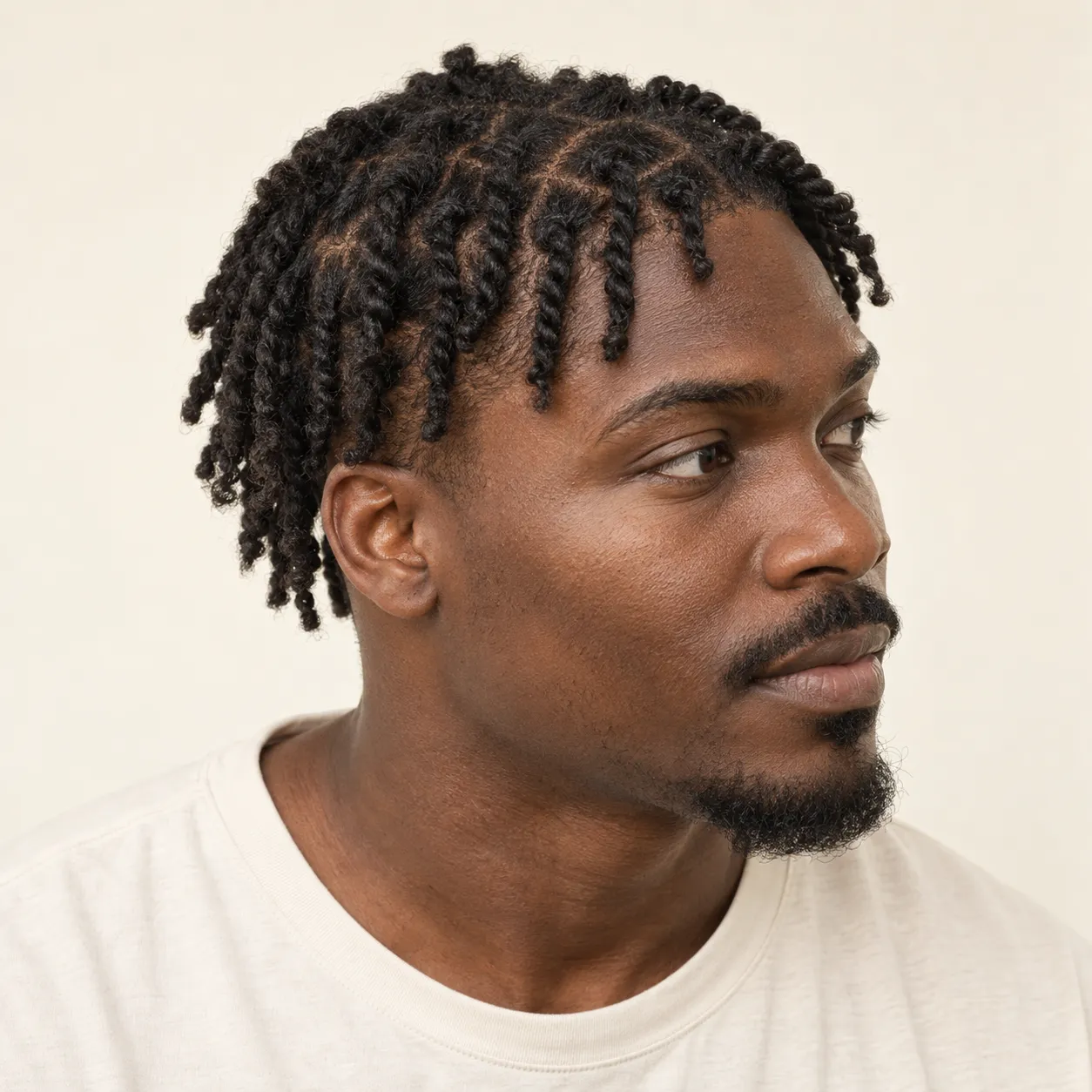
Reference gallery
Different ways it can read
Generated references show design details, not a real person or a diagnostic hair type.
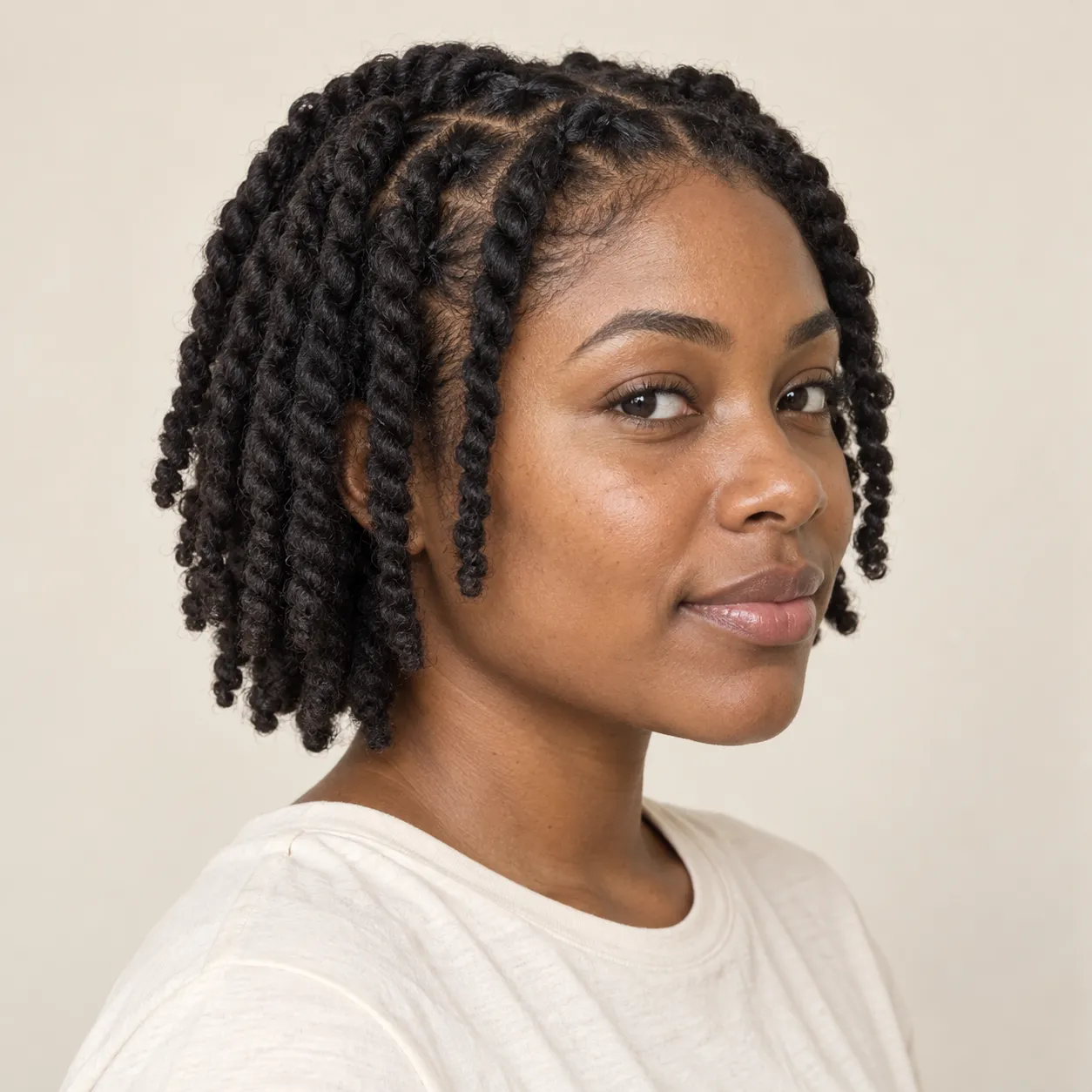
Variations
Choose the details
Individual twists
Separate sections hang away from the scalp, with size and parting determining the visual rhythm.
Flat twists
Two sections are twisted along the scalp, creating a row-like, scalp-following arrangement.
Rope-style twists
A tighter or more cord-like finish whose exact technique should be confirmed with the stylist.
Name the twist type, part size, length, direction, and whether extensions or a temporary set are wanted.
- Do you mean individual two-strand twists, flat twists along the scalp, or a rope-style finish?
- What part size, direction, and finished length should the stylist use?
- Are extensions wanted, and if so, what added length or weight feels manageable?
- Is the goal a temporary twist set, or are you discussing starter or maintained locs instead?
“I’m looking for medium individual two-strand twists with a visible part pattern, no extensions, and enough length to keep the ends neat. Please keep the tension comfortable and tell me how this differs from a flat twist.”
What changes the result
Bring these variables
- Straight and wavy hair may need enough length, sectioning, or a setting approach to hold a temporary twist; that is a styling conversation, not an exclusion.
- Curly and coily hair can show different shrinkage, definition, and stretch after twisting; agree on whether the finished look should be shrunken, elongated, or allowed to set.
- Extensions, long lengths, and tight installation add weight or pull. AAD advises loosening styles that hurt, sting, crust, or visibly pull the scalp; persistent hair loss needs a dermatologist’s assessment.
Pattern guidance
Explore by family
Temporary twists may need enough length and a setting plan to hold; discuss section size, direction, and how long the set should last.
Wave can add movement to twists or loosen a temporary set; ask whether the goal is visible wave, stretched length, or a tighter wrapped shape.
Curl can make twists look springier or shorter after release; agree on part size and whether the finished twists should be elongated or compact.
Coily hair often gives twists strong shape and shrinkage; discuss stretch, moisture, parting, and comfortable tension rather than assuming one required method.
Related guides

Sources reviewed
Milady Standard Natural Hair Care and Braiding, 2nd Edition · Milady · reviewed 2026-09-20
Braids vs. Twists: What’s The Difference? · Carol's Daughter · reviewed 2026-09-20
Hairstyles that pull can lead to hair loss · American Academy of Dermatology · reviewed 2026-09-20