Finishing technique
Taper fade
A taper fade is a conversation about where the blend begins, how far it travels, and how close the shortest finish gets to the skin. A low taper can keep more of the sides and top; a higher or skin finish changes the silhouette more visibly.
The phrase is not a single fixed blueprint. Bring a reference, name the sideburn and neckline finish, and describe how much length you want left on top. The same perimeter idea can be paired with waves, curls, coils, or a straight top while the top keeps its own shape.
A good consultation makes the blend visible in words: where it begins, how high it rises, and whether the lowest part is shadow, very short, or skin-level. Placement and finish matter more than the label alone.
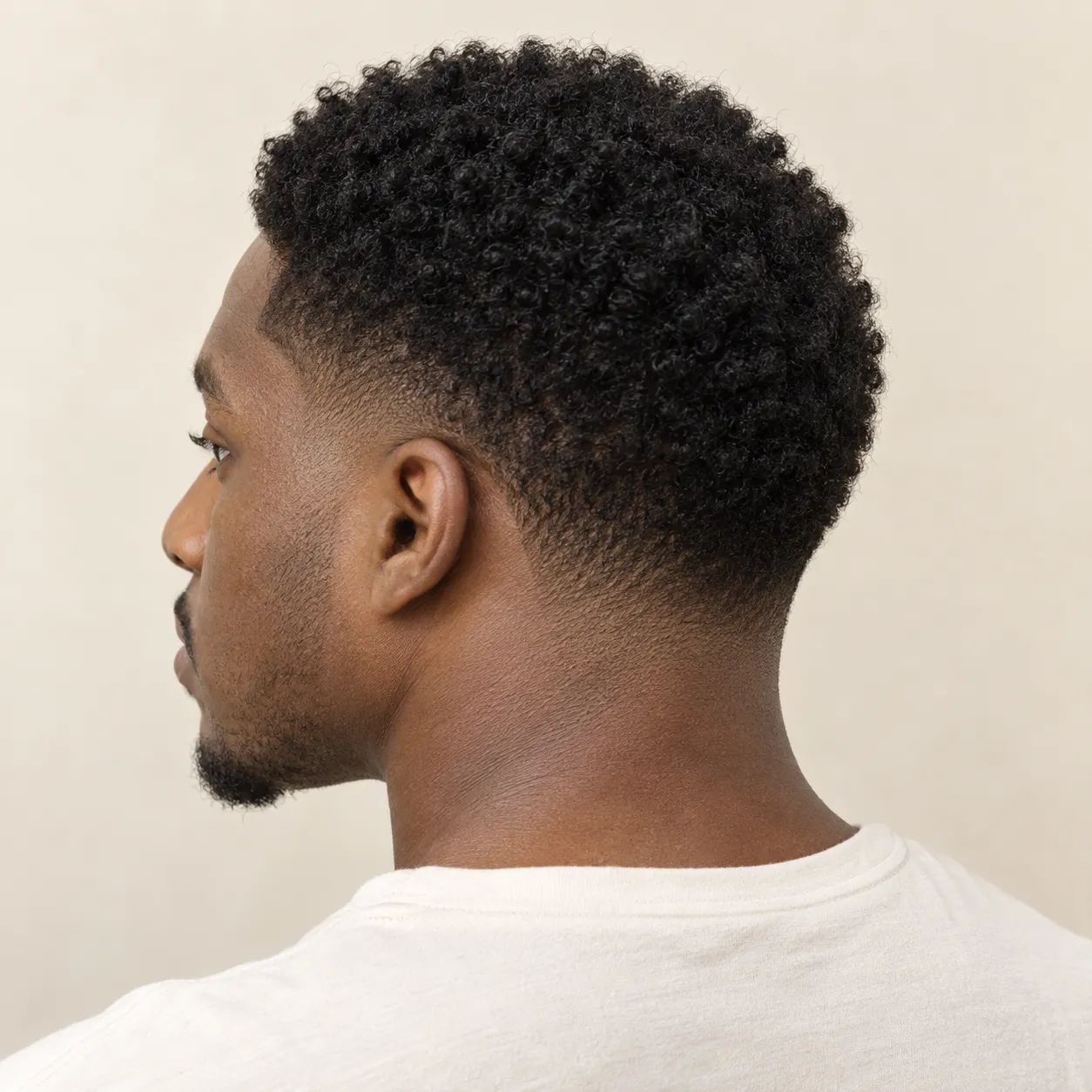
Reference gallery
Different ways it can read
Generated references show design details, not a real person or a diagnostic hair type.

Variations
Choose the details
Low taper
Keeps the transition close to the sideburns and neckline, leaving more of the sides visually intact.
Higher taper / wider fade
Moves the blend farther around the head; confirm whether your shop uses “higher taper” or “fade” for the requested service.
Skin or bald finish
Takes the lowest part to skin-level appearance before blending upward.
A useful request names the placement, shortest finish, top length, and edge details separately.
- Should the taper sit only at the temples and neckline, or blend around the whole head?
- How low should the shortest area go: shadow, very short, or skin/bald?
- How much length and shape should stay on top, and should the natural pattern be left visible?
- What should happen to the sideburns, neckline, and any part or line-up?
“I’d like a low taper at the temples and neckline, blended but not bald, with the top left long enough to keep its natural shape. Please show me the shortest area before you finish the edges.”
What changes the result
Bring these variables
- Growth direction, cowlicks, density, and the contrast between the perimeter and top can change how seamless the blend looks.
- A reference photo communicates placement and finish better than “make it clean”; ask the practitioner to translate it to your current length.
- Maintenance depends on how crisp you want the edge and how quickly your perimeter grows, not on a fixed hair-family rule.
Pattern guidance
Explore by family
A taper can keep a straight top clean and graphic; ask how much perimeter contrast you want against the mostly linear fall.
A taper can preserve visible wave on top; discuss whether the blend should follow the wave’s volume or keep the sides flatter.
Leave enough top length for the curl shape you want to wear, and ask how the blend will look as curls spring back after cutting.
The perimeter can be shaped while the coily top stays full or patterned; show the desired height and explain whether the edge should be soft or crisp.
Related guides


Sources reviewed
Fluid Vol 1: Low Taper Fade · Andis Education · reviewed 2026-09-20
STEP-BY-STEP GUIDE FOR CUTTING HAIR · Wahl Professional · reviewed 2026-09-20