Cut
Edgar cut
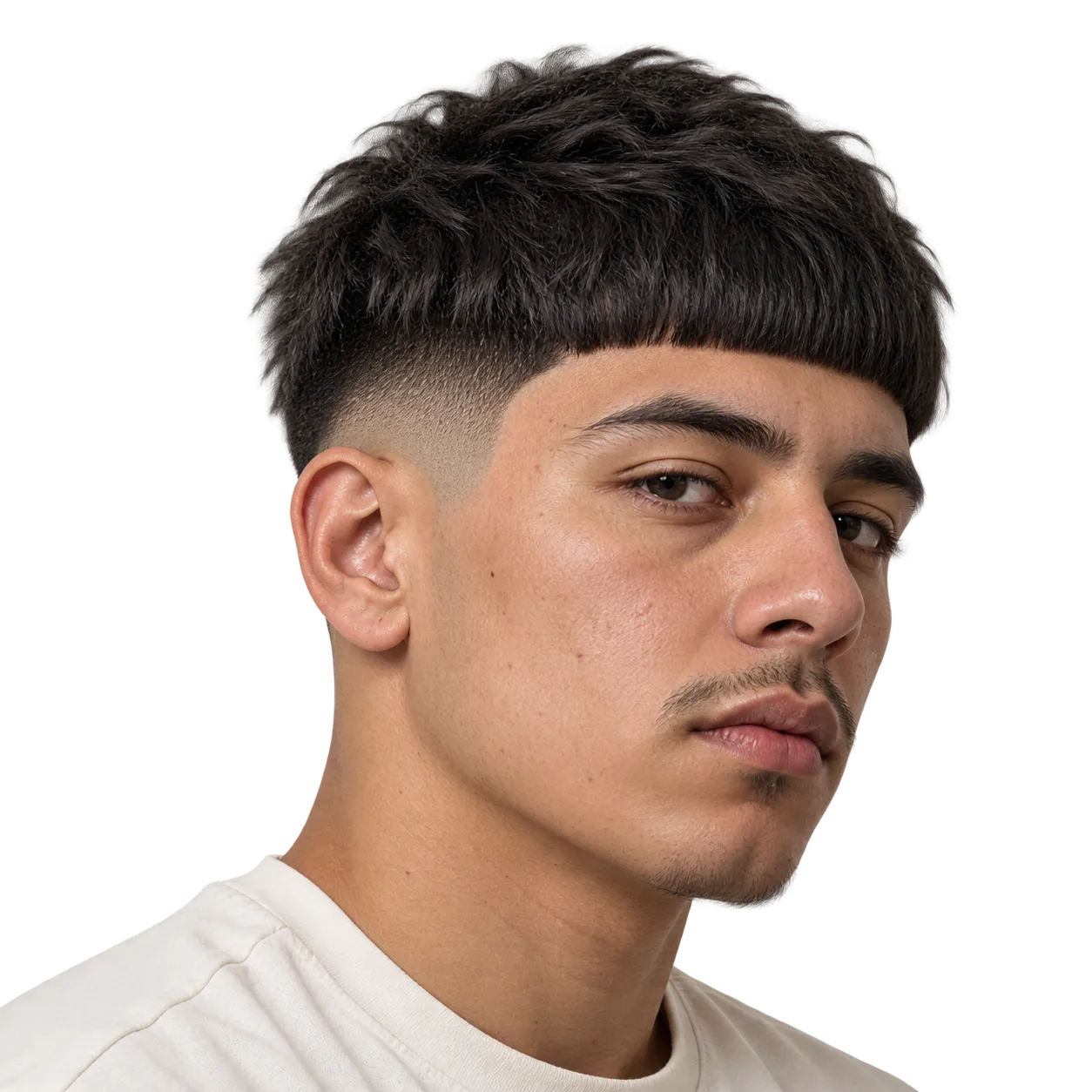
The Edgar is recognizable first by its deliberately blunt front edge. Hair is directed forward and cut into a strong horizontal fringe rather than softened into wispy bangs or swept away from the forehead.
The top retains noticeably more weight than the sides, often producing a compact rounded or bowl-like silhouette. A taper, fade or stronger disconnected transition keeps the perimeter tight and emphasizes the heavier upper section.
The style became especially visible among young Latino and Mexican-American communities in the southwestern United States during the 2010s and early 2020s and is closely associated with contemporary takuache culture.
The origin of the name is uncertain. One popular account links it to a haircut and design involving baseball player Edgar Martínez, while other reporting points to much older Indigenous hair traditions in the Jumano region. Neither establishes a documented inventor of the modern cut.
Style notes
- Hair Type Compatibility
- 1A1B1C2A2B2C3A3B3C4A4B4C
Estimates describe how closely defining features can be achieved with ordinary cutting and styling while preserving the natural curl pattern, assuming sufficient length. They are not personal suitability scores, promises, or eligibility guidance. Each segment is labeled for screen readers with its subtype and resolved score.
Examples
More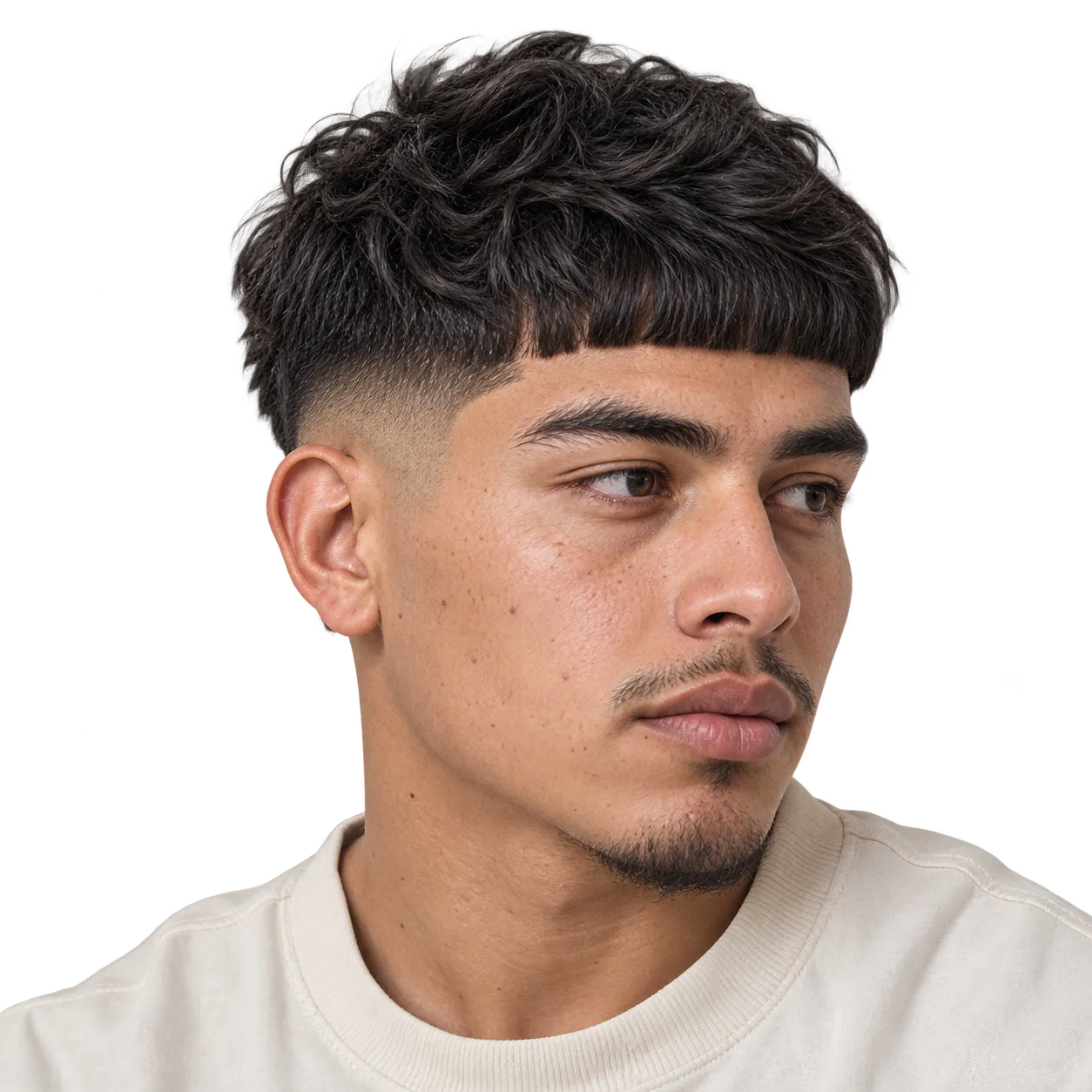
Variations
Choose the details
Classic Edgar
Keeps the top relatively flat and dense, with a severe straight fringe and closely tapered or faded sides.
Fluffy Edgar
Retains the blunt forward fringe but allows greater texture, wave and height through the top for a softer, more voluminous silhouette.
High-fade Edgar
Raises the side fade substantially, increasing the contrast between the compact upper mass and the nearly bare lower perimeter.
Agree on fringe height and sharpness, how much weight should remain on top, and whether the sides should use a taper, low fade, mid fade or higher skin fade.
- How high above the eyebrows should the blunt fringe sit?
- Do you want the front edge extremely straight and sharp or slightly textured while retaining the Edgar shape?
- Should the top lie relatively flat or keep more volume for a fluffy Edgar?
- Do you want a taper, low fade, mid fade or high fade through the sides and back?
- How much natural wave or curl do you want to preserve through the top?
“I want an Edgar with a dense short top, a blunt straight fringe across my forehead and tightly faded sides. Keep the front line very clear, but leave enough natural texture on top that it does not look completely flat.”
What changes the result
Bring these variables
- The blunt fringe is the most important identifying feature; heavily softening or sweeping the front can make the result read closer to a French crop.
- Maintaining a very sharp front line and fresh fade usually requires relatively frequent barber visits as both edges become visibly softer with growth.
- Dense straight or slightly wavy hair naturally supports the compact upper shape and crisp fringe particularly well.
- Wavier hair can produce a successful fluffy Edgar, but its front edge usually reads less mechanically straight than the classic version.
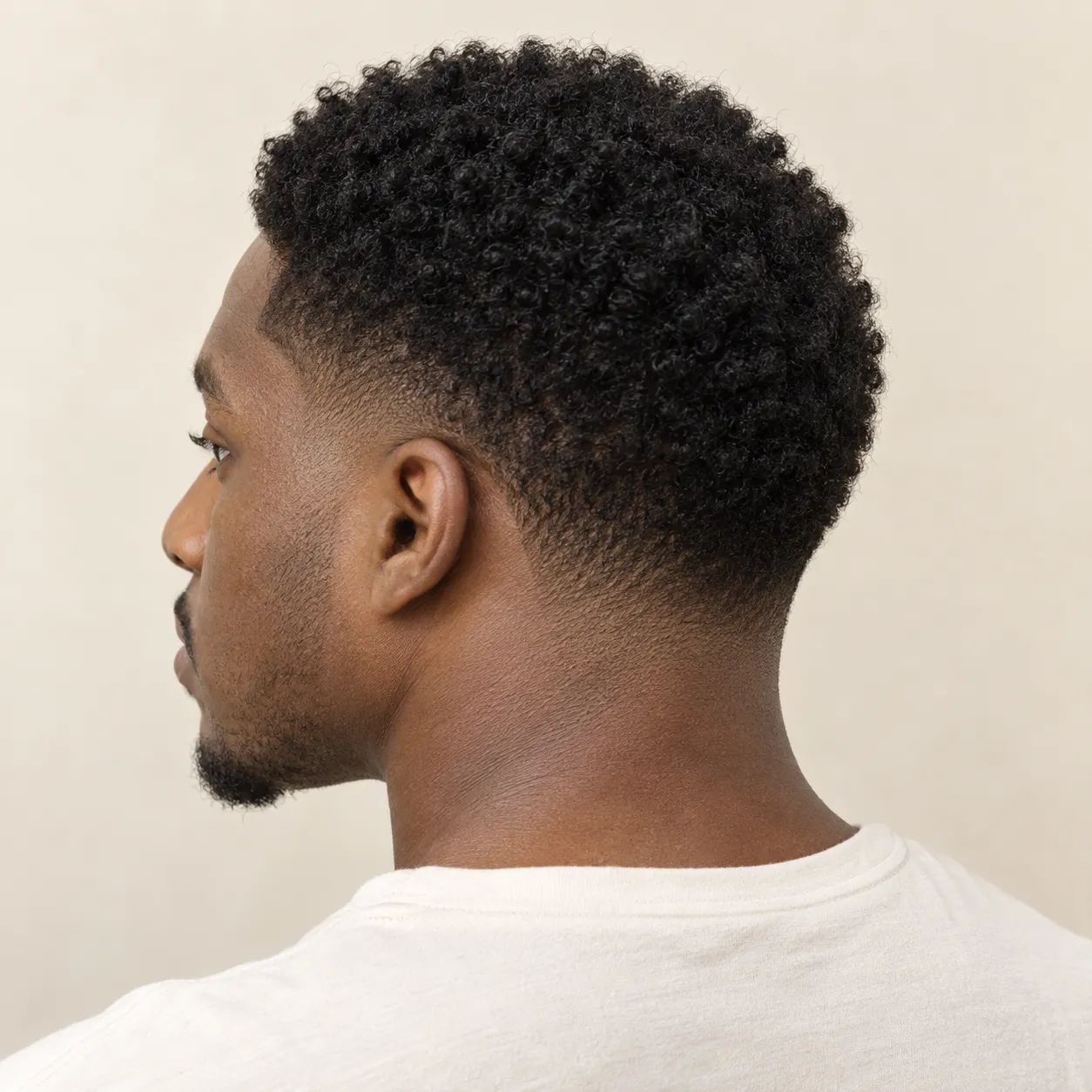
- Increasing curl tightness changes the defining fringe and rounded top substantially when the natural pattern is preserved.
- Cowlicks or strong changes in growth direction around the front hairline can make a perfectly horizontal fringe more difficult to maintain.
- The Edgar has specific cultural associations with young Latino and Mexican-American communities, but those associations do not restrict who can technically wear the haircut.
Related Hairstyles
More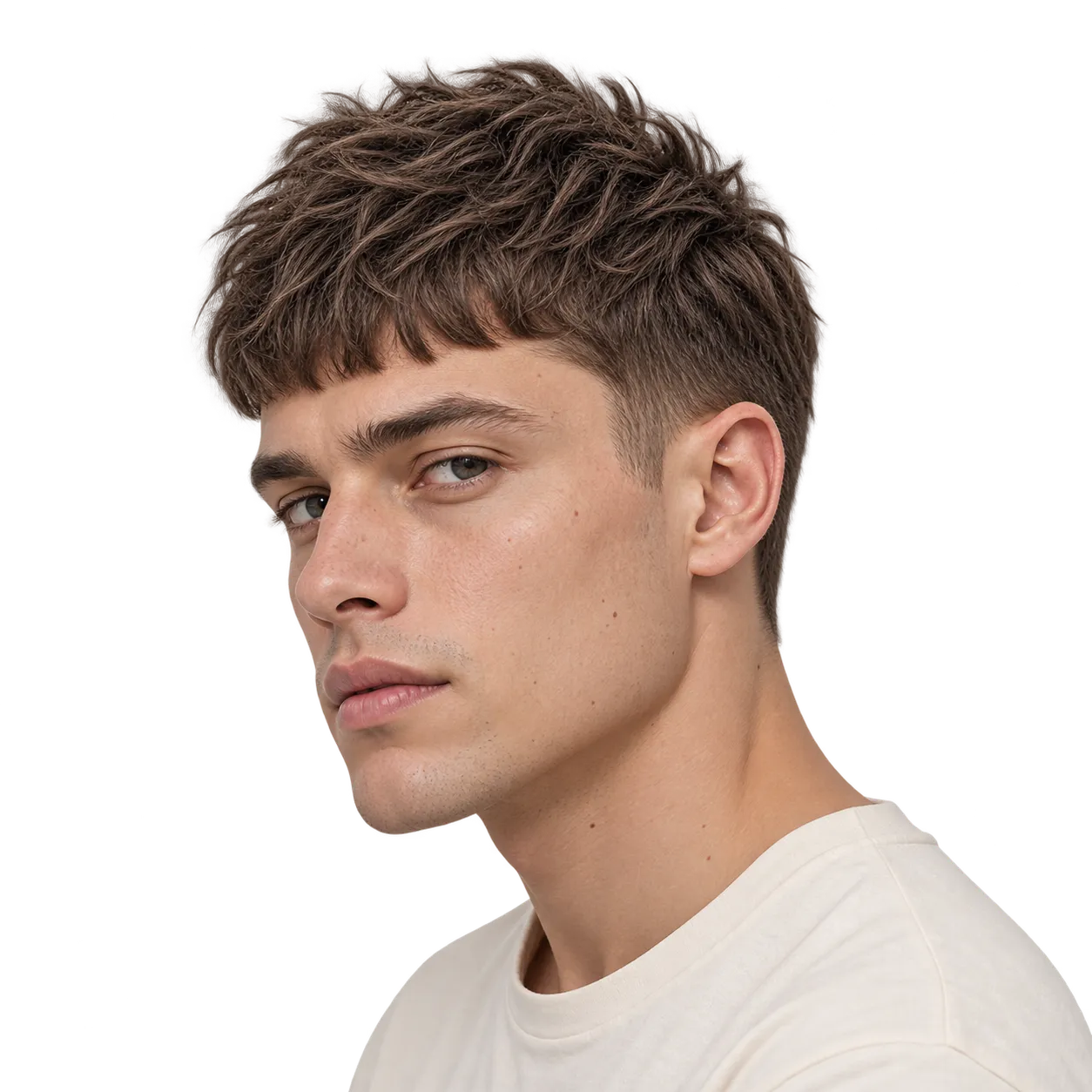
Sources reviewed
Introducing the Edgar haircut: the go-to style you've seen but couldn't name · British GQ · reviewed
Edgar | English meaning · Cambridge Dictionary · reviewed
The Edgar is all the rage among the foos · Los Angeles Times · reviewed
Cómo surgió y qué hay detrás del ‘Edgar’, el corte de cabello que se ha vuelto viral entre jóvenes latinos · Telemundo · reviewed